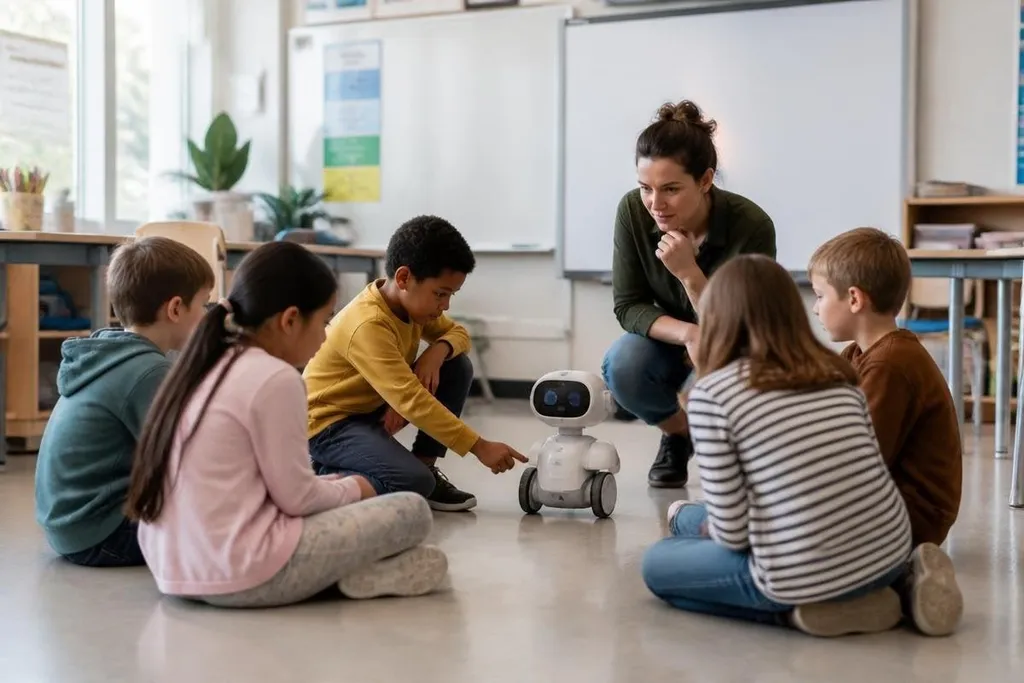
Educational robots are easy to judge in a video and harder to judge during a lesson. A machine may walk, speak, or answer questions, yet still fail when 25 students need clear instructions and steady access to the same activity.
The useful question is not which country or company moves fastest. It’s which robot helps a teacher reach a defined learning goal, at a price the school can support.
Quick read
- A classroom robot needs a lesson plan, not only a list of sensors.
- Battery life, setup time, safety, and teacher controls shape daily use.
- Buyers should ask for classroom evidence before comparing headline features.
What “better” should mean
A better educational robot gives students a task they can understand, repeat, and discuss. That task might involve writing code, measuring motion, building a control system, or asking the robot to respond to a spoken command.
The robot’s body matters because it sets the limits of the lesson. A mobile platform needs enough battery for the planned class, while an arm needs a safe work area and a gripper that can hold the objects students use.
A camera or microphone also changes what data the system collects from children.
The lesson matters more than the demo. A teacher needs to know what students do in minute five, what happens when the robot makes an error, and how the class resets the activity without waiting for a specialist.
The classroom test
Setup time is one useful measure. Ask how long it takes to charge the robot, connect it to a school network, load the lesson, and return it to a known starting state. A 10-minute setup may fit between classes; a 45-minute setup may remove the lesson from the timetable.
Teacher control needs the same attention. A dashboard should show the robot’s battery, connection, current task, and stop control in plain language. If a teacher has to open a terminal or change code during every lesson, the system may fit a robotics lab better than a general classroom.
Safety also needs a clear test. Check the robot’s speed, moving parts, emergency stop, noise, and behavior when a student blocks its path. A school should receive written limits for age groups, room size, supervision, and the objects the robot may handle.
A written safety limit matters only if a school can check where it came from. Reporting from Robot 24 can connect a classroom robot claim to a named machine, test setting, and date. That record lets a buyer separate a school trial from a lab demo run under controlled conditions.
What the evidence should show
A useful trial report names the age group, number of students, lesson length, robot model, and teacher workload. It also states how many sessions ran, how many stopped early, and what caused each failure.
A short video can show motion. It cannot show whether students understand the task after four lessons or whether a teacher can fix a lost network connection. Those answers need classroom records, teacher notes, and student work.
Cost needs the same care. Ask for the robot price, yearly software fees, replacement parts, training, shipping, and the computer or tablet needed to run it. A low purchase price can change once a school adds 20 student accounts and a second charging set.
The open gap is proof across different classrooms. A robot that works in a small lab with one instructor may need new software, rules, or support in a large public school. I’d rank repeatable lesson results above a polished demonstration.
A buying checklist
Use this list before a pilot or purchase:
- Name the lesson: write the learning goal, class age, session length, and expected student task.
- Time the setup: record charging, network connection, software loading, and reset time.
- Check the safety plan: confirm speed limits, emergency stops, supervision rules, and moving-part risks.
- Count the full cost: include hardware, software, training, repairs, batteries, and classroom computers.
- Request trial records: ask for session counts, failure reasons, teacher time, and student results.
A pilot should finish with a decision, not another demonstration. Set a pass rule before the robot arrives, such as 80% of planned sessions completed within the class period and no unresolved safety fault.
What happens next
The next useful step in educational robotics is a shared test format for lessons, setup, safety, cost, and student work. Until makers publish those details, schools should compare robots by the class they can support, not by how polished the demo looks.